
Looking Back at Scary Apps: A Halloween Spotlight on Data Privacy in EdTech
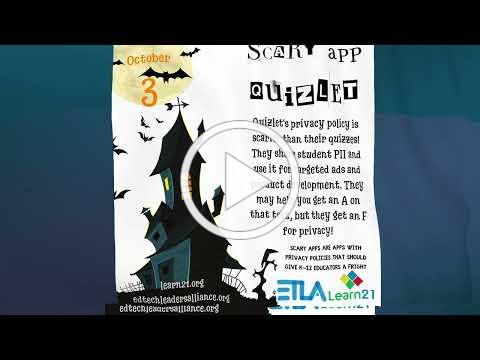
As the pumpkins and decorations change seasons, it’s a perfect time to reflect on this year’s Scary Apps campaign—a month-long exploration into data privacy nightmares lurking in educational technology. This October, we set out to unmask apps used in K-12 settings with concerning data practices, like sharing personal information with third parties, tracking usage across platforms, and refusing to sign critical Data Privacy Agreements (DPAs). The response has been overwhelming, with educators, parents, and districts engaging in discussions about privacy, trust, and technology in our schools.
Government Technology’s recent article, highlighted our campaign’s importance, emphasizing how crucial it is for educational apps to safeguard students’ personal data, especially as digital tools become embedded in everyday learning. This campaign offered a fresh, albeit spooky, lens through which to examine the digital landscape.
Among the apps that raised the most eyebrows:
- Unity Technologies: With its targeted ads and refusal to sign a DPA, Unity’s data practices may leave student creators exposed to privacy risks that reach beyond the classroom.
- Duolingo: Known for language learning, Duolingo shares personal data with third parties for advertising and won’t sign privacy agreements for schools—putting student privacy at risk with every new phrase they learn.
- Chess.com: Popular among students, Chess.com not only collects game data but also shares personal information with third-party advertisers. For students, a simple game can quickly become a privacy risk.
- Loom: Despite its popularity for video communication, Loom’s privacy policy excludes DPAs unless districts pay high fees, which means student data may not be protected in typical classroom use.
Through Scary Apps, we aimed to not only raise awareness but also empower educators and parents to make informed choices about the tools they bring into their classrooms. Data privacy is not a seasonal topic; it’s an ongoing commitment that requires vigilance, transparency, and action.
As we turn the page on this campaign, we encourage everyone to keep privacy in mind year-round. For more details on our findings and to stay updated on future campaigns, visit ETLA’s Scary Apps page. You can also check out our recap of Scary Apps below.
Media Literacy Minute: Boosting Media Savvy
Welcome to this week’s edition of Media Literacy Minute! This week, we’re diving deeper into some important insights, resources, and partnerships designed to strengthen media literacy among young people. Here’s what’s happening:
📊 NLP Teen Survey Report 2024: The News Literacy Project’s Teen Survey Report 2024 provides crucial insights into how teens engage with news and their perceptions of media. The report reveals that a majority of teens struggle to determine the credibility of online sources, with only 26% saying they feel confident in evaluating the trustworthiness of information they see online. The report emphasizes the importance of teaching skills like source-checking and lateral reading to help students navigate a complex digital landscape. It also highlights that nearly half of teens feel overwhelmed by the amount of information they encounter each day, underscoring the need for structured media literacy education to help them manage and critically assess this content.
📱 YouTube’s Media Literacy Partnership for Teens: YouTube has announced a new partnership focused on providing media literacy education for teens, aimed at helping young viewers discern fact from fiction in the vast content ecosystem of YouTube. This partnership with Poynter Institute’s MediaWise is part of YouTube’s broader initiative to support responsible content consumption and improve digital literacy among youth [YouTube Blog].
🔍 Lateral Reading as a Tool for Online Assessment: The University of Maryland is promoting lateral reading as an essential skill to evaluate online information. This approach, where readers verify a source by cross-referencing other sources, is a practical technique educators are now advocating to help students and adults alike become more discerning consumers of online information.
For further insights on integrating media literacy into your community or educational programs, reach out to Learn21 at engagements@learn21.org or explore our resources at bit.ly/medialitlaws.
Extra Credit
Late 2023 saw generative AI (GenAI) shaking up workplaces, with tools like ChatGPT transforming tasks and freeing workers from mundane duties to focus on creative aspects. While generative AI is often used for content creation, its potential reaches far beyond, aiding in brainstorming, research, and even turning educational content into engaging videos. The value of generative AI in transforming communication lies not only in its capacity to generate content but also in its ability to tailor interactions.
Google Chrome now includes new modes for Memory Saver — Standard, Balanced, and Advanced — allowing you to customize how aggressively inactive tabs free up your computer's resources. Chrome is also debuting a Performance Detection tool that can identify and resolve potential speed bumps in your browsing with a ‘Performance issue alert’ symbol next to the address bar. This feature, part of the new Chrome 130 update, gives you the power to deactivate resource-intensive tabs with a click.
Apple is creating a movie based on the MECC educational game The Oregon Trail. Will Speck and Josh Gordon, known for Blades of Glory and Office Christmas Party, will be directing. There is no information of a cast or release date, but the movie will be taking on the form of a comedy/musical and released on Apple TV+. Will it be good? As someone who enjoys watching Battleship, I'm probably not the one to ask because I think it sounds pretty cool.
🙋♂️ Bytes and Insights is co-authored by Eduk8me’s Ryan Collins who writes about education and educational technology. He is also the Director of Technology for Kenton City Schools in Ohio. Sign up for his Of Bits and Bytes newsletter at https://eduk8.me!