Welcome to our new friends from TCEA! You may not have travelled home with a Star Wars Echo Dot, but you’re the real winner because you’ll be receiving Bytes & Insights in your inbox each week.
The Power of Words: Why Language Matters in Technology-Driven Communication
While technology allows us to be more connected than ever, it doesn’t solve the problem of miscommunication. The words we choose—their tone, clarity, and intent—play a pivotal role in shaping our relationships, especially when technology acts as the intermediary.
For educators and leaders in the EdTech sphere, understanding the nuances of language in digital communication is crucial. Here are eight tips to keep in mind that will ensure our digital words foster connection:
1. Clarity is Kindness
Misunderstandings are minimized when messages are straightforward and concise, whether crafting an email, posting an announcement, or providing feedback. Clear communication, often bolstered by tools like bullet points or numbered lists, ensures that diverse audiences can easily grasp complex ideas without unnecessary jargon.
2. Tone Sets the Stage
Without visual cues, written messages can easily be misinterpreted. Strive for a tone that is professional yet warm. Emojis or exclamation marks, when used sparingly and thoughtfully, can add a touch of friendliness without compromising professionalism.
3. Empathy in Every Interaction
Empathy deepens the impact of communication. Consider the recipient’s perspective when crafting messages. Are they a stressed student, a parent navigating new technology, or a teacher balancing multiple priorities? Empathy ensures that your message resonates and builds trust.
4. Cultural and Linguistic Sensitivity
In a globally connected world, cultural and linguistic sensitivity is indispensable. Language reflects culture, and digital communication often crosses borders. Be mindful of phrases or idioms that might not translate well. Avoid assumptions about cultural norms and aim for inclusive language that respects diversity.
5. Feedback that Builds
Constructive comments—those that highlight strengths and offer actionable suggestions—build confidence and encourage improvement. Instead of focusing solely on what’s wrong, highlight strengths and offer actionable suggestions. For example, instead of saying, “This report lacks detail,” try, “You’ve outlined some great ideas here. Adding more examples would make your argument even stronger.”
6. Harnessing the Power of Visuals
Sometimes, a picture (or a GIF) is worth a thousand words. Visuals can clarify intent and add a layer of engagement, but they should complement—not replace—well-crafted language. Ensure images and graphics are accessible by adding alt text for screen readers.
7. Modeling Digital Etiquette
As leaders and educators, we set the tone for communication norms. Model respectful language in all interactions, from emails to online discussions. Encourage students to think before they type and to consider how their words might be received.
8. Encouraging Reflection
Tools like Grammarly or Readable can help refine language, but encouraging self-reflection on communication is equally important. Ask: Does this message convey what I intend? Is it inclusive and respectful? Would I be comfortable receiving it? We also recommend checking data privacy policies for any apps you use. For example Grammarly will not sign a DPA for their free version.
Final Thoughts
In the digital age, words are powerful tools that can either build bridges or create barriers. By choosing our language thoughtfully, we can ensure our messages inspire connection, understanding, and collaboration.
As you navigate the world of tech-driven communication, remember: it’s not just about the tools we use, but the words we choose to use with them.
Media Literacy Minute
How Influencers Are Impacting Journalism
KGOU examines how social media influencers are shaping journalism, often blurring the lines between reporting and personal branding. The article discusses the challenges of distinguishing credible sources from promotional content and calls for stronger media literacy education to help audiences critically evaluate influencer-driven narratives.
WPSU Helps Pennsylvania Educators Teach Media Literacy
WPSU is working with Pennsylvania educators to develop tools and resources for teaching media literacy in classrooms. The initiative focuses on engaging students in analyzing news and media critically, helping them identify bias and misinformation while fostering informed citizenship. [Penn State News]
"Revealing Schoolchildren’s Key Situations in the Use of Digital Media Inside and Outside School: A Media Diary Study" is a research study that examines schoolchildren's use of digital media. Below are key insights and findings:
Key Situations Categorized
The study analyzed 145 key situations where children used digital media, categorized into 15 types such as video gaming, digital learning, online communication, and content sharing.
Settings and Emotional Impact
- Most key situations occurred outside of school (115 vs. 30 in-class events).
- Children predominantly reported positive emotional experiences associated with their digital media use.
Media Usage Trends
- Video gaming was the most frequently reported activity.
- Smartphones were the most commonly used devices, followed by computers and tablets.
- Platforms like Google, WhatsApp, and YouTube were among the top tools utilized.
Reflection and Learning
- 75% of children did not feel the need to change their media behavior retrospectively.
- 53% reported learning something from their media interactions, such as improved digital skills or better emotional self-regulation.
Communication and Social Support
- Discussions about media use were more common with family members and friends than with teachers.
- Face-to-face communication was preferred over online methods when reflecting on their media experiences.
This study underscores the multifaceted role of digital media in children's lives, suggesting that educators can use insights from key situations to better align educational practices with children's digital experiences. It also begs the question, if most key situations happen outside the classroom, wouldn’t we want to include devices in the classroom to help students learn appropriate uses of technology?
Current Language Trends: Authentic Ways to Engage
Language is a powerful tool—it shapes relationships, builds connections, and fosters understanding. For educators, language is a bridge to their students’ world. The words we use and the way we interpret them can either strengthen or hinder our relationships with students.
Gen Z, born between 1997 and 2012, communicates in ways that often feel foreign to more mature generations. Their slang, memes, and digital shorthand reflect their culture, humor, and values. While educators don’t need to adopt this vernacular, understanding it is crucial. When students feel understood, they are more likely to trust their educators, engage in learning, and express themselves authentically.
Why Understanding Language Trends is Important
Gen Z language is more than just slang—it’s a reflection of their lived experiences. Trends in their speech often reveal the social, cultural, and technological influences shaping their lives. For instance, terms like “slay” and “vibe” highlight their focus on individuality and emotional resonance, while phrases like “it’s giving…” demonstrate a shared sense of humor rooted in internet culture.
Understanding these trends allows educators to decode what students are really saying. For example, if a student calls something “low-key,” they mean it’s understated or subtle—not that it involves an actual key. Knowing this language can help educators avoid miscommunication and better support students’ social and emotional needs.
Moreover, being aware of slang and language trends can prevent educators from unintentionally dismissing or misinterpreting students’ expressions. It’s about listening and learning, not trying to be “cool” or “trendy.”
Glossary of Common Gen Z Slang
Here are a few terms you might hear in the classroom:
- Bet: Agreement or affirmation. Example: “Can I borrow a pencil?” “Bet.”
- Cap: A lie. “No cap” means “I’m not lying.” Example: “That test was so hard, no cap.”
- It’s giving…: Used to describe the vibe or essence of something. Example: “It’s giving Friday energy.”
- Low-key: Subtly or somewhat. Example: “I’m low-key excited about the field trip.”
- Mid: Mediocre or average. Example: “That movie was mid.”
- Rizz: Charisma or charm, often in the context of flirting. Example: “He’s got mad rizz.”
- Skibidi: A term or meme from viral internet trends, often associated with humor or randomness. Example: “That dance move was so skibidi.”
- Slay: To succeed at something or look great. Example: “You slayed that presentation.”
- Sus: Suspicious. Example: “That excuse sounds sus.”
- Vibe: A mood or feeling. Example: “This playlist is such a vibe.”
How to Show Students You Authentically
While understanding Gen Z language is valuable, authenticity matters more. Here’s how educators can connect meaningfully:
- Be Curious: Ask students to explain slang or phrases you don’t understand. It shows that you’re interested in their world.
- Listen Without Judgment: Avoid labeling their language as “silly” or “wrong.” Respect their communication style as valid and meaningful.
- Use Their Language Sparingly: If you try to use Gen Z slang, do so sparingly and only when it feels natural. Overuse can come across as forced or inauthentic.
- Focus on Understanding, Not Mastery: The goal isn’t to “speak like them” but to understand what they mean. Your willingness to learn speaks volumes.
- Build Trust Through Action: Knowing their language trends is a step, but showing care through actions—like being patient, supportive, and genuinely interested in their lives—is what truly matters.
- Hold Students to High Academic Standards: Help students identify and understand when it’s appropriate to use slang and when to adopt a more academic tone. This guidance prepares them for different contexts while respecting their way of communicating.
By learning the language of Gen Z, educators demonstrate that they value students’ voices. It’s not about trying to “fit in” but about showing students that their words and experiences matter—because they do. Now that I’ve outed all of these common Gen Z terms. I’m sure we can all expect a new dictionary next week.
Big Ideas
Girls and STEM: Breaking Barriers Early
A recent study highlights that stereotypes about girls’ abilities in STEM subjects emerge as early as age six, shaping perceptions and discouraging interest. The findings underscore the urgency of fostering STEM confidence in young girls through inclusive teaching and representation. As the mom of two female scientists, this is something that hits home to me. How can we as educators and leaders dismantle these biases and nurture early curiosity?
Nanospaghetti and Next-Gen Fabrics
Scientists have created the world’s thinnest spaghetti—nanopasta—unlocking potential in ultra-lightweight and flexible materials. This breakthrough could revolutionize industries like fashion and aerospace. The leap from culinary inspiration to scientific innovation leaves us wondering: What other everyday ideas could fuel the next major discovery?
Is AI Making Us Dumber?
This study explores the nuanced debate over whether AI tools are diminishing critical thinking and creativity or merely reshaping how we approach problems. While AI simplifies tasks and enhances productivity, over-reliance could lead to skill erosion. The key takeaway: balance is essential. How can we integrate AI into education and work without sacrificing human ingenuity and critical reasoning?
Toyota’s Woven City: The Future of Smart Living
Toyota’s ambitious Woven City, a prototype smart city in Japan, is now welcoming its first residents. Designed as a testing ground for AI, robotics, and sustainable living, it offers a glimpse into a fully connected urban future. This experimental city raises a pivotal question: How might smart infrastructure redefine community and collaboration in the years ahead?
On the Road to PETE&C!
Next week, the Learn21 team is hitting the road to attend two incredible EdTech conferences: PETE&C in Hershey, PA, and OETC in Columbus, OH. These events bring together educators, technology leaders, and industry experts to explore the latest trends in educational technology, and we’re excited to be part of the conversation!
Stop by Our Booth at PETE&C
📍 Hershey Lodge | February 9-12, 2025
🎪 Booth #550
If you're attending PETE&C, be sure to visit us at Booth 550! We’ll be showcasing how Learn21 supports schools and districts with innovative EdTech solutions. Whether you're looking to enhance digital learning, streamline operations, or strengthen cybersecurity, we’re here to help. Stop by to chat, ask questions, and explore what’s next in education technology!
Sessions You Won’t Want to Miss at OETC
We’re also looking forward to attending OETC, where two insightful sessions on media literacy and AI-powered collaboration will be taking place:
From Clickbait to Credibility: Media Literacy in an AI World
📅 February 12, 2025 | 3:30 PM
📍 B234/235
🎤 Presenters: Carly Ghantous & Danni Tymitz
With the rise of AI-generated content, media literacy is more important than ever. This session will dive into strategies for helping students and educators critically evaluate digital information and distinguish fact from fiction.
The Power of Prompting: Collaborating, Not Copying
📅 February 13, 2025 | 2:15 PM
📍 A121/122
🎤 Presenters: Carly Ghantous & Danni Tymitz
AI tools are transforming how we learn and create—but how do we ensure students are using them effectively and ethically? This session explores the art of prompting, showing how AI can enhance collaboration rather than replace original thought.
Join Us At These Sessions
In addition to these key sessions, Learn21 CEO Kevin Ghantous will also be attending:
👥 Are you Interested in Tech Leadership? Learn from ETLA Mentor/Mentees
📅 February 13, 2025 | 8:00 AM
📍 A216
🤝 ETLA/Ohio CoSN Mentorship Meetup
📅 February 13, 2025 | 10:30 AM
📍 C150/151
For more details on these and other OETC sessions, check out the OETC Session Agenda.
Let’s Connect!
Are you attending PETE&C or OETC? We’d love to see you there! Whether you stop by our booth at PETE&C or join one of these engaging sessions at OETC, let’s connect and continue pushing the boundaries of educational technology together. Follow us on social media and stay tuned for updates, insights, and conference highlights!
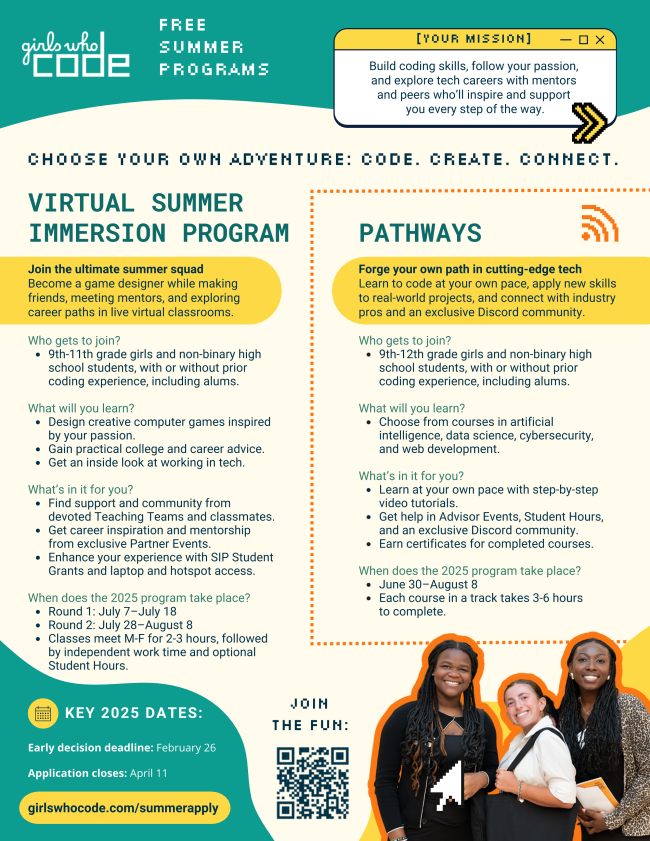
It’s official–the Girls Who Code 2025 Summer Programs Application is officially open!
Girls Who Code Summer Programs help high school girls and nonbinary students build coding skills, explore career pathways in tech, and connect with a supportive community–no program fees or prior coding experience required!
Students can choose their own adventure with two exciting program options:
Summer Immersion Program (SIP): Spend two weeks designing computer games in live virtual classrooms while making friends, getting practical college and career advice from industry leaders, and exploring a future career in tech. Eligible students can apply for a $300 SIP Student Grant plus laptop and hotspot access!
Pathways: This flexible, six-week program lets students learn at their own pace with step-by-step video tutorials. Participants explore hot topics in tech like artificial intelligence, data science, cybersecurity, and web development, with opportunities to apply new skills to real-world projects and get career insights from tech industry pros.
2025 Program Dates
SIP Round 1: July 7 - July 18
SIP Round 2: July 28 - August 8
Pathways: June 30 - August 8
Why Choose Girls Who Code Summer Programs?
- Whether students are brand new to coding or advanced, our programs are open to all skill levels.
- Students who participate in our Summer Programs are significantly more likely to explore careers in computer science-related fields than their peers who don’t.
- Join the growing community of nearly 40,000 students who have participated in our Summer Programs.
Ready to apply? Submit the Summer Programs Application to start your adventure!
Key Application Info
- Apply by February 26th for priority consideration! The application closes on April 11th.
- Summer Programs are open to high school girls and non-binary students, including alums.
- No application or program fees!
Questions? Learn more at one of our upcoming webinars, or email us at summer@girlswhocode.com.