
Recharging with Purpose: EdTech Trends to Watch and Implement Before Fall
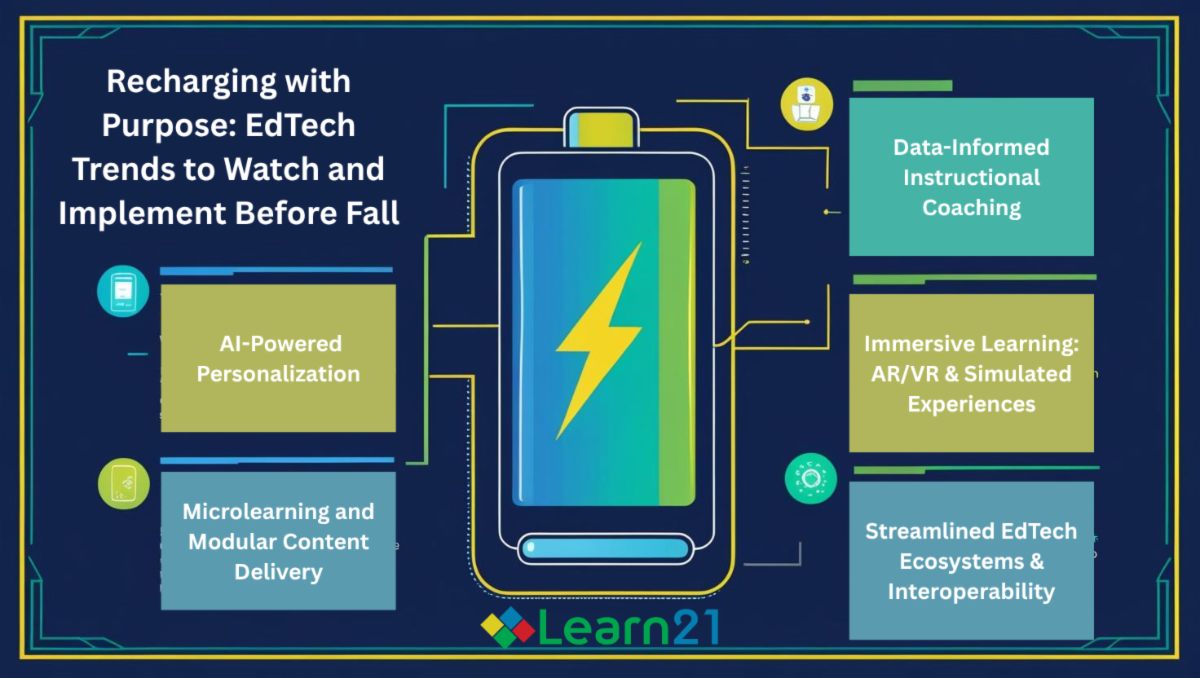
As schools prepare to reopen for a new academic year, the summer months offer a golden opportunity not just to rest, but to recharge with intention. The rapidly evolving educational landscape demands that educators and administrators stay proactive, leveraging emerging technologies and instructional models that meet the moment. Here’s a forward-looking lens on five key EdTech trends to integrate now, so you're not just ready for fall, but leading it.
1. AI-Powered Personalization: From Buzzword to Backbone
What’s emerging:
Artificial Intelligence is rapidly becoming the backbone of personalized learning. Adaptive Learning Platforms (ALPs) dynamically adjust content and pacing based on real-time learner data. This method is shown to enhance both engagement and academic outcomes. A 2024 study published in Computers and Education: Artificial Intelligence confirms that AI-driven tutoring and adaptive systems significantly improve learning performance by tailoring instruction to individual needs. Tools like BrainFreeze, Khanmigo, and MagicSchool AI, are leading the way, offering personalized feedback and differentiated instruction at scale.
Implementation tip:
Pilot an adaptive tool that offers formative feedback loops. Pair this with professional development focused on ethical use, equity, and data literacy to build both trust and fluency among educators.
2. Microlearning and Modular Content Delivery
What’s emerging:
Microlearning—delivering content in short, focused bursts—is becoming a cornerstone of modern instruction. With attention spans under siege, bite-sized learning modules are proving effective for both students and professional development. Think “TikTok meets curriculum” but with rigor and structure. This microlearning approach aligns well with current cognitive science, too. A 2022 scoping review in Educational Technology Research & Development highlights that microlearning reduces cognitive load and improves retention, especially when grounded in strong instructional design. Tools like Edpuzzle, Wakelet, and Nearpod support this model, enabling educators to build engaging, digestible learning playlists that work across devices.
Implementation tip:
Design weekly microlearning “nuggets” for students and professional development. Think video snippets, interactive polls, or infographic-driven summaries. Bonus points if students co-create them!
3. Data-Informed Instructional Coaching
What’s emerging:
Instructional coaching is evolving from intuition-based support to data-informed collaboration. Real-time classroom analytics enable coaches to provide actionable, evidence-based feedback. Studies have shown that coaching models incorporating real-time data significantly increased instructional quality and student outcomes, especially when cycles of feedback were structured and regular. Using tools like Swivl or Edthena can help to facilitate coaching and encourage reflective practices among educators.
Implementation tip:
Establish a biweekly “data touchpoint” rhythm. Coaches should bring classroom or student learning data to discussions, helping teachers target their instructional shifts with confidence.
4. Immersive Learning: AR/VR & Simulated Experiences
What’s emerging:
Augmented and virtual reality are gaining traction beyond novelty and into impact. From virtual chemistry labs to simulated civil rights experiences, immersive learning environments have proven benefits. A number of studies have been conducted to measure the effects of AR and VR technology on educational outcomes, showing improvements in motivation, retention, and even empathy among students. Google Arts & Culture Expeditions is an easy way to begin the immersive learning experience in classrooms with little implementation cost.
Implementation tip:
Pilot one immersive tool in a subject area where traditional approaches face limitations, like science labs or social-emotional learning. Involve students in evaluating the experience for feedback and iteration.
5. Streamlined EdTech Ecosystems & Interoperability
What’s emerging:
As EdTech ecosystems expand, districts are shifting focus from tool quantity to tool quality—and interoperability is key. Platforms that integrate via Single Sign-On (SSO), shared dashboards, and standardized APIs reduce friction and improve usability. According to the OECD Digital Education Outlook 2023, systems that support interoperability are more effective at scaling innovation and data-informed decision-making.
Implementation tip:
Conduct an EdTech ecosystem audit. Keep what integrates well with your SIS, LMS, and assessment systems; sunset tools that don’t “talk” to each other. Ask vendors about their roadmap for interoperability.
Final Thoughts: Lead the Shift, Don’t Chase It
Fall shouldn’t feel like a scramble. By investing time this summer to explore emerging trends, pilot new tools, and simplify your tech stack, you can step into the school year with clarity and momentum. But the biggest trend to follow? Purpose. Thoughtful, intentional adoption always outpaces trend-chasing. Let’s recharge not just to recover—but to reimagine.
Media Literacy Minute
APA Health Advisory: AI & Adolescent Well-Being
The American Psychological Association has issued a comprehensive health advisory focused on how artificial intelligence may affect adolescents’ mental health. The document highlights risks like algorithmic bias, harmful content exposure, and social comparison pressures, especially on AI-powered platforms. It recommends involving youth in policy design, promoting digital literacy, and creating age-appropriate AI tools that foster agency, equity, and well-being.
Project Look Sharp Named to AASL’s 2024 Best Digital Tools List
Ithaca College’s Project Look Sharp, a long-time leader in media literacy, was recently honored by the American Association of School Librarians (AASL) as one of 2024’s Best Digital Tools for Teaching & Learning. The resource-rich platform offers free curriculum kits that empower K–12 educators to integrate critical thinking and media analysis into any content area. Read more.
High School Op-Ed: Trust in an Age of Misinformation
In this opinion piece from the L.A. Times High School Insider, student writer Arya Kaur explores the erosion of trust in information and institutions among her peers. She calls it a "crisis of trust," shaped by misinformation, biased media, and lack of transparency. Her solution? Greater investment in youth-centered media literacy that promotes skepticism without cynicism.
Learn21's Summer Reccomended Reading

As the pace of the school year gives way to the slower rhythms of summer, it’s the perfect time to pick up a good book. We are big fans of diving deep into professional learning or getting lost in a compelling story. At Learn21, our team believes that great reading inspires great leading, and we’re excited to share what’s on our bookshelves this summer.
We’ve gathered recommended reads from our staff. These titles range from thought-provoking education titles to can’t-put-it-down fiction, and a few books we’re eager to explore before fall rolls around. Whether you’re looking for something to spark innovation, fuel reflection, or just offer a well-earned mental escape, we hope our list offers a little something for every reader.
Aaron Kitelinger
She Who Became The Sun By Shelly Parker-Chan
To Be Read
He Who Drowned The World By Shelly Parker-Chan
The Dawn Of Yangchen By F.C Yee
Wicked: The Life and Times of the Wicked Witch of the West By Gregory Maguire
Allie Prusha
To Be Read
Slow Productivity by Cal Newport
Atomic Habits by James Clear
Danni Tymitz
The Housemaid is Watching by Freida McFadden
To Be Read
Good Dirt by Charmaine Wilkerson
What She Lost by Melissa Hunter
Demon Copperhead by Barbara Kingsolver (Finally finishing)
Erica Shumaker
The Body Keeps the Score: Brain, Mind, and Body in the Healing of Trauma by Bessel van der Kolk M.D.
To Be Read
Sunrise on the Reaping by Suzanne Collins
Kevin Ghantous
Man’s Search for Meaning by Viktor Frankl
To Be Read
Everything is Tuberculosis by John Green
Crossing the Chasm by Geoffrey Moore (re-read)
Stacy Hawthorne
Friendly Fire by John Gilstrap
To Be Read
Brave, not Perfect (CoSN Book Club Book) by Reshma Saujan
Big Ideas
Meta & Yandex’s Sneaky Android Tracking
Researchers caught both companies turning fleeting web-session IDs into hard-to-shake app identifiers, quietly linking what you read in a mobile browser to who you are in Facebook, Instagram, or Yandex apps. Google says the practice violates Play Store rules and is racing to patch it; the firms say they’ve paused the technique. Until fixes land, privacy experts suggest blocking their pixels or ditching the apps entirely—prompting the bigger question: if “sandbox” walls can be tunneled under this easily, what else is leaking? theverge.com
Gen Z & Millennials Want the “Money-Meaning-Well-being” Trifecta
Deloitte’s 23,000-person global survey finds younger workers hungry for growth but not obsessed with titles; just 6 percent of Gen Z put “becoming leadership” first. Instead, Gen Z is focused on continuous learning and mental health. Three-quarters say GenAI will reshape their jobs within a year! Employers that can weave skill-building, purpose, and pay into one package will win the talent race and those that can’t risk quiet quitting 2.0.
Which AI Chatbot Gobbles Up the Most Data?
Surfshark’s privacy audit of Apple-store chatbots crowns Meta AI the data-hungry champ, slurping 32 of 35 possible data types, including sensitive categories like religion and genetics, while ChatGPT collects just 10 and does zero third-party tracking. Copilot, Poe, and Jasper still track you for ads, and nearly half of the apps grab precise location. Before you hit “accept,” check those privacy labels—your chatbot may know more about you than your best friend.