
Supporting Neurodiverse Learners
If you've said these things to a student, there is a good chance you are a neurotypical person working with a neurodivergent student:
- How many times do I have to tell you?
- Stop talking to your neighbor.
- Why can't you remember your homework?
Attention Deficit Hyperactivity Disorder (ADHD) is a neurodevelopmental disorder characterized by symptoms such as difficulty in maintaining attention, hyperactivity, and impulsiveness. ADHD is within the realm of neurodiversity, a concept that recognizes and respects neurological differences as natural variations of the human brain. Other neurodiverse conditions include autism, dyslexia, and processing disorders.
Students with ADHD often face challenges in the classroom that are difficult for neurotypical individuals to understand. Neurodivergent students may struggle with maintaining focus, following detailed instructions, and managing impulsive behavior. As such, supporting students with ADHD in the classroom requires a multifaceted approach, tailored to address the unique challenges they face. Creating a structured environment is paramount. This involves establishing a consistent and predictable routine in the classroom. Along with structure, incorporating active breaks throughout the school day can be highly beneficial. A classroom procedure to help ADHD students focus on the task at hand is Pomodoro Technique It breaks working time into 25 minute slots with a break. Unfortunately, this may also require a re-thinking of the class day schedule, which may be difficult to enact.
Classroom instruction needs to be adaptable, engaging, and structured. A struggle for students with ADHD can be a diminished working memory. It's not that they have less working memory, it's that their memory is also working on several other things at the same time. One place where this diminished capacity rears its head is when providing directions to the students. By the time you get to the third direction, the first direction is already lost. Providing written instructions can help all students ensure they are completing the directions correctly.
Supporting neurodiverse students requires educators to create an inclusive and supportive classroom environment. A classroom that acknowledges and accommodates the diverse needs of ADHD students, along with other neurodiverse students.
Tips and Tricks
When it comes to fonts, everyone has their favorites. I'm currently an Oswald/Calibri fan, but even those favorites can get pushed to the side. For example, Oswald is great for headings and titles for adults, but is problematic in the elementary classroom:
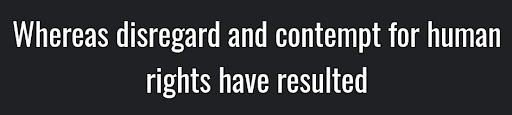
The characters are narrow and tall, but the problem is the lowercase a and g. No human in the history of the world has willingly written letters like that. Calibri also suffers from this issue.
Another issue that arises from fonts is when characters are ambiguous, such as a zero & capital O and a one & lowercase l. The problem arises when you share usernames and passwords:
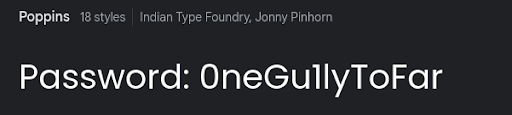
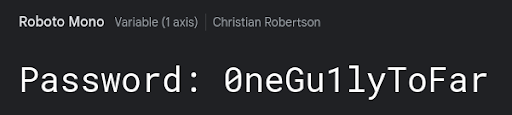
Which one is clearer?
What size font you use also has an effect on comprehension. There has been research into font size, spacing, and line spacing at the elementary level. At the high school level research has found that hideous fonts may boost reading comprehension (The original paper isn't at the same location, but I found it on Internet Archive here). The research into hard to read fonts doesn't show any reading gains for pre-adolescents.
Basic Times New Roman turns out to be a good font to use for materials at the elementary level while middle and high school students may benefit from a more difficult to read font. (And whatever you do, don’t use Garamond to submit legal briefs to the DC Circuit Court of Appeals.)
Learn21 Update
Tech Heroes Assemble! Streamline Your District with Self-Service Superpowers ⚡
During our latest webinar, Learn21 demoed the Self Service add-on for Tech Director Toolbox Asset Manager that automates cumbersome device management workflows. These new superpowers allow staff and students to efficiently report issues, swap loaners, and collect devices completely on their own! 🦸♀️
With a linked kiosk, end users can log incidents and securely access designated towers to make exchanges, pick up, or drop off devices. Behind the scenes, the towers sync with TDT-Asset to track reservations and facilitate device swaps.
By unleashing these Self Service tools, technicians gain back countless hours previously spent manually managing transactions. Now they can focus their efforts on higher-value tasks that really require human insight. It's a win-win for maximizing productivity and minimizing frustrations!
The real-life impact is proven too - current districts utilizing self-service have logged over 3,000 reservations to date! From forgotten devices to broken screens, students and staff are leveraging the towers without tech heroes rushing to the rescue each time. 🏆
Ready to unlock these workflow wonders in your own district? With simple setup and customization, your team will be on their way to a Self Service paradise! Ditch the manual exchanges, device assignments, and dropoffs and embrace the future of streamlined edtech management.
Contact us to start manifesting your Self Service superpowers! With great efficiency comes great responsibility - equip your technologists to act only when their true powers are needed. The towers summon them! ⚡
Extra Credit
ChatGPT and its ilk lie “with the confidence of a middle schooler who just got caught vaping." Researchers call this "Hallucinating" and it just made Cambridge's Dictionary's word of the year. I still call it flat out lying.
I find articles that I wish I could share in person just to see the reaction, and this is one of them. Researchers have found that students learn at mostly the same rate. There are no fast or slow learners, they just have different starting points. Add these findings to the myth of learning styles.
Twenty percent of students who have heard of ChatGPT say they have used it to help them with their schoolwork especially at the higher grade level. The knowledge of ChatGPT is showing a socioeconomic divide, where it's more likely that well-off students will have heard about it or used it. The good news is that a majority believe that it's not OK to use ChatGPT to do the work.
This is an oldie but a goodie. See what happens when mathematicians’ favorite chalk is discontinued.
Bytes and Insights is written by Eduk8me’s Ryan Collins who writes about education and educational technology. He’s also the Director of Technology for Kenton City Schools in Ohio. Sign up for his Of Bits and Bytes newsletter at https://eduk8.me.