
Using Data Responsibly: Wrapping Up Our Review of the Student Data Principles
This article concludes a series exploring data use, misuse, and governance in K–12 education. The Student Data Principles—originally developed by CoSN and the Data Quality Campaign in 2014 is still a critical set of tenets to help guide educational decision-makers. Each installment has presented the principles, offered current insights, posed key questions for leaders, and suggested practical steps districts can take to strengthen their data governance practices.
Why Revisit the Student Data Principles?
The Student Data Principles, despite being over a decade old, are still highly relevant in today’s rapidly evolving EdTech landscape. Current innovations, such as generative AI, cloud platforms, and advanced analytics, represent new ways of collecting and utilizing data. Never before has data governance and stewardship been so important.
These tenets hold us to a high standard with regard to our staff, parent and student data. So far, we have covered these Principles:
- Student data should be used to further and support student learning and success.
- Student data is most powerful when used for continuous improvement and personalizing student learning.
- Student data should be used as a tool for informing, engaging, and empowering students, families, teachers, and school system leaders.
- Students, families, and educators should have timely access to information collected about the student.
- Student data should be used to inform—and not replace—the professional judgment of educators.
- Students’ personal information should only be shared, under terms or agreement, with service providers for legitimate educational purposes; otherwise the consent to share must be given by a parent, guardian, or a student, if that student is over 18. School systems should have policies for overseeing this process, which include support and guidance for teachers.
- Educational institutions, and their contracted service providers with access to student data, including researchers, should have clear, publicly available rules and guidelines for how they collect, use, safeguard, and destroy data.
- Educators and their contracted service providers should only have access to the minimum student data required to support student success.
- Everyone who has access to students’ personal information should be trained and know how to effectively and ethically use, protect, and secure it.
Ok, here we are! The last, and in many ways, the most important, Student Data Principle. Simply put, the last Principle exhorts us to have a strong data privacy governance culture.
- Any educational institution with the authority to collect and maintain student personal information should:
- have a system of governance that designates rules, procedures, and the individual or group responsible for decision making regarding data collection, use, access, sharing, and security, and use of online educational programs;
- have a policy for notification of any misuse or breach of information and available remedies;
- maintain a security process that follows widely accepted industry best practices;
- provide a designated place or contact where students and families can go to learn of their rights and have their questions about student data collection, use, and security answered.
Key Questions for Reflection
Data governance must be a team sport.
- Even in a small district, ask yourself who your partners are in the nuanced, complicated world of student data privacy.
- Who are your inside partners (food services, curriculum)?
- Who is your outside network (other districts, ETLA, CoSN)?
- When was the last time we conducted an audit (what data, who has it, how is it stored and distributed) on a data collection?
- Finally, always, always, ask yourself if the data collection is directly contributing to your organization’s strategic mission. In other words, why are you doing the work?
Action Steps for Leaders
To align your district’s work with the Principles, consider the following:
- Practice data minimization: use the bare minimum of data elements required to reduce data sprawl. However, don’t preclude future analysis and functionality by being too streamlined. Is it complicated? Yep. See the next two action steps.
- Develop your Professionals: Ongoing, job-embedded training is important for all your staff. Your entire data governance team needs to be able to critically evaluate the risk/reward of all your data actions. Commit yourself to ongoing learning through CoSN. You say that you don’t have a data Governance team? You mean that you don’t have a data governance team, yet.
- Build a data governance team: Don’t swim alone. Build and develop a data governance team that evaluates your access levels, leads professional development, and reviews practices. Think about your SIS admins, your partners in special education, security, and others. It’s hard to have a culture of data security without a team to support you.
Closing Thoughts
Thanks for joining us this last month as we’ve reviewed the Student Data Privacy Principles; we hope you found some key takeaways and practices or concepts you can bring to your district. Next month brings us the first of the year. Perhaps you can build on or refine that data governance team as a New Year’s Resolution. Ideally, you see that good data stewardship, while complicated and changing with new technologies, is ultimately about building trust in your community. Trust that you’re helping drive teaching and learning through timely and accurate data, trust that you’re building a walled data garden, and finally, trust that you have a team to help you make the thousands of decisions required by an EdTech leader.
Oh, and we're always here to answer your data privacy questions or tell you more about our privacy services for schools. You can email us privacyservices@learn21.org.
Media Literacy Minute
Why Social Media Can Be Harmful for Young People
In a recent Psychology Today article on why social media harms children and teens, the author explains how algorithm-driven comparison, curated images, and constant social feedback loops fuel anxiety and low self-esteem in young users. The piece emphasizes that adults can help by practicing “active mediation” — talking with students about what they see online, helping them question unrealistic portrayals, and building media-literacy habits that strengthen resilience. For educators, the takeaway is clear: open conversations and guided reflection often matter more than strict rules.
Why People Fall for Fake News
A new study highlighted by Georgia State University explains that people don’t fall for fake news simply because of political bias, but because misinformation often triggers strong emotional responses that feel personally relevant. The research shows that when content resonates emotionally, it can override careful evaluation of facts. It’s an important reminder of why media-literacy skills matter more than ever.
Teens Don’t Trust the News—and That’s a Problem
According to a national survey reported by SheKnows, many teens view news media as biased, untrustworthy, or disconnected from their lives. This growing skepticism highlights the need for educators to help students understand how journalism works and how to evaluate credibility without disengaging entirely from news.
Bytes and Insights Staff Spotlight: Carly Ghantous
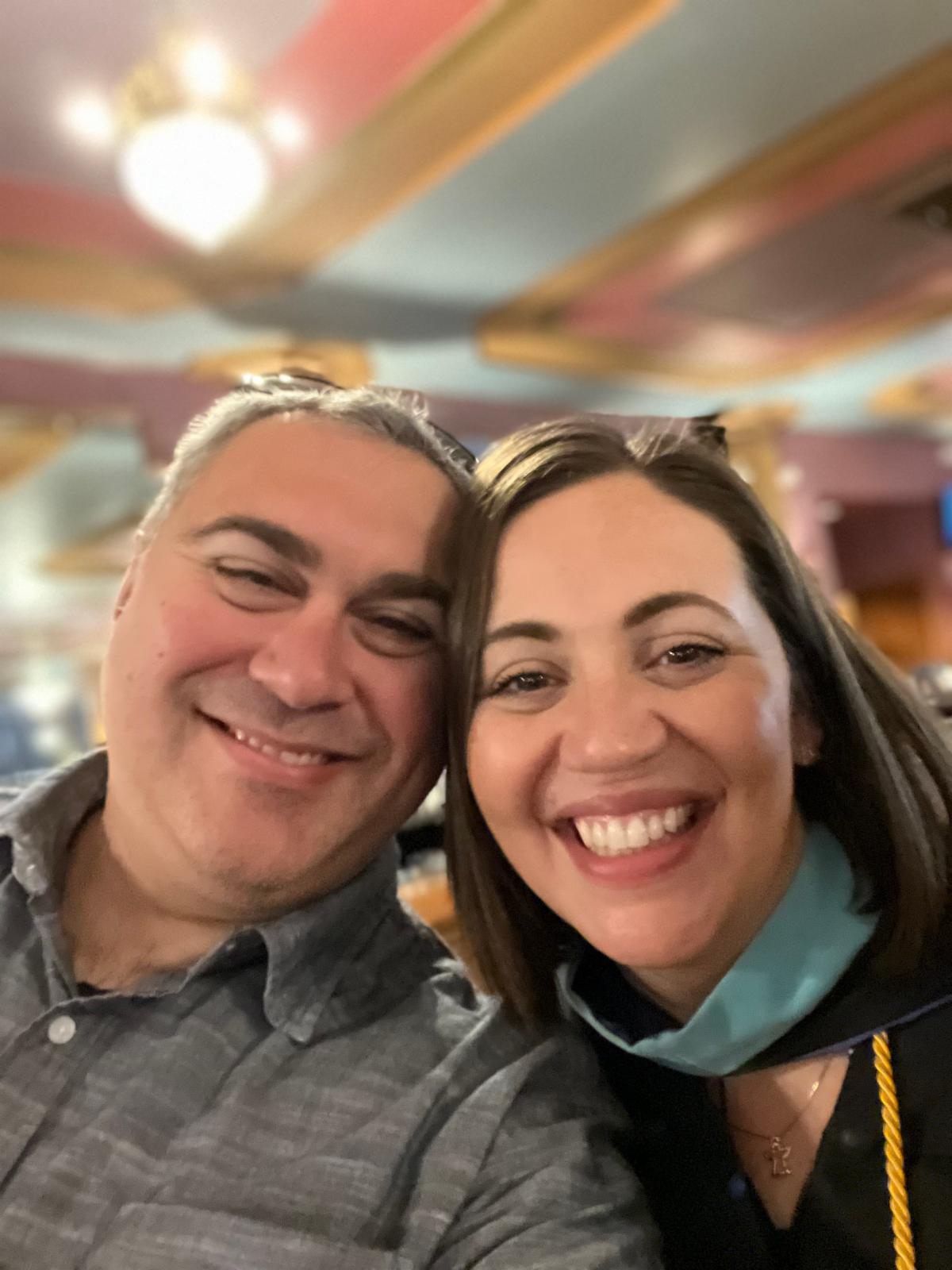
We are so excited to highlight one of our Bytes and Insights contributors, Carly Ghantous! Carly is an incredible online instructor, course designer, writer, innovator, and person. We can't wait to for you to learn more about her this week.
Describe your role at Learn21
I'm an Educational Change Agent, but most of my time is dedicated as an online humanities instructor at Davidson Academy Online.
What did you do before Learn21?
Before Learn21, I taught high school English at a brick-and-mortar school.
Where did you go to college/ what did you major in?
I went to the University of Cincinnati for my undergrad in Secondary Education and I got my Master's in Instructional Design and Technology from American College of Education.
What's a hidden talent or hobby that not many people know about you?
I'm not sure if this is a talent or a defect, but I can watch a television show or movie and read a book at the same time and follow both stories.
If you could learn any skill or hobby instantly, what would it be and why?
I would love to be able to learn any language instantly. Being able to communicate regardless of language would be awesome (and so useful!).
If you could trade lives with someone for a day, who would it be and why?
I would trade with my dog, Piper. No responsibilities and naps all day long.
Big Ideas
AI Scraping and Web Indexing-It’s Complicated
As this article illustrates, we’re living through a fundamental change in how we access the Internet. In the past, search engines indexed (scraped) the web to deliver accurate and relevant responses to a web search request. While that is still happening, the big AI players are training their AI models on web content. It gets complicated when content creators want to exempt their original material from AI, but want their websites to be discovered. Cloudflare details how they’ve blocked 416 billion (with a “B”) AI bot requests since July 1.
And it even tells time!
If there is any constant to our relationships with our technology, it is that with every product design feature, there is an unintended consequence. Or two. This article details our love/hate relationships with our Smartwatches and all the data they provide. On one hand, Smartwatches give us incredible data and in some cases can even be an early warning system for health issues. On the other hand (maybe the little hand?), we stress out about the data, and it can lead to worse health outcomes.
Where do you plug it in?
We all know that air travel is one of the primary sources of carbon emissions and other pollutants. Now, new developments in clean energy are finding their way into air travel. New Zealand is testing two promising technologies: battery and hydrogen powered planes. While not targeted for commercial passenger planes, yet, early results on short haul cargo flights are giving transportation experts reasons to be positive. More here.
Happy Holidays from all of us at Learn21 and the EdTech Leaders Alliance! Your inbox might miss us for the next two weeks but we will be back in the new year!